

Bioforcetech Receives Columbia University CDI Grant to for OurCarbon Carbon-Negative Concrete Ingredient
Bridge Carbontech award funds the final piece of BFT's supply chain connecting New York's wastewater and construction sectors via OurCarbon®
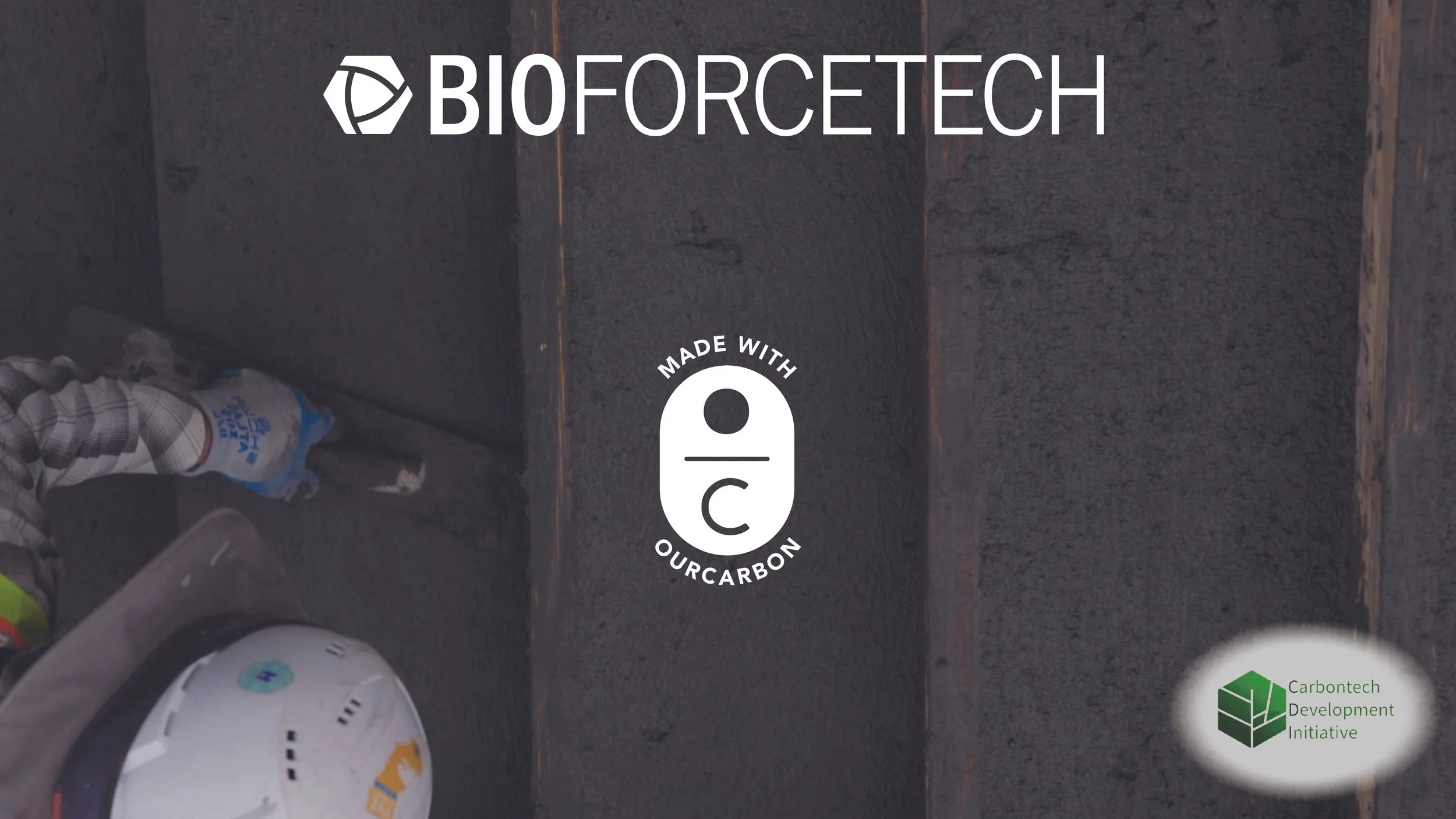
Bioforcetech's OurCarbon® biochar stores carbon in structural concrete for centuries. It is made by transforming sewage sludge, solving multiple problems throughout its production and application chain.
SOUTH SAN FRANCISCO, Calif. — July 13, 2026 —
Bioforcetech (BFT), the leading producer of biosolids-derived biochar in North America, today announced it has received a Bridge Carbontech grant from Columbia University's Carbontech Development Initiative (CDI) to develop an industrial-scale dosing system for OurCarbon®, its carbon-negative concrete aggregate. The award, valued at $310,000, will fund design, prototyping, and production of a demonstration system that enables consistent, automated delivery of OurCarbon into concrete trucks for use at commercial batch plants.
BFT has spent years building a supply chain that connects two critical infrastructure sectors: wastewater and construction. With this award, the company is now positioned to complete it. The CDI-funded dosing system will allow any concrete batch plant to receive, store, and incorporate OurCarbon continuously and reliably—storing carbon durably in the built environment for generations, in the cities and communities where the material is produced.
“Bioforcetech has made its name building technologies that enable circularity. We are excited to take everything we’ve learned processing wastewater solids and apply it to closing a carbon loop into concrete for durable long-term storage.”
- Dario Presezzi, CEO Bioforcetech
“New York State is a clear example of a government that is untangling the many difficulties in decarbonizing and cleaning up its material streams. The CDI team recognized this solution as a multibenefit opportunity for the state’s waste and construction sector.”
- Garrett Benisch, Chief Development Officer at BFT.
New York State is at an inflection point in both biosolids management and construction decarbonization. Tightening PFAS regulations and rising disposal costs are accelerating pressure on municipalities to find alternatives to landfilling and land application, while state and city procurement mandates are driving demand for lower embodied carbon in the built environment. BFT's model addresses both in a single regional supply chain loop—converting a municipal waste liability into a carbon-negative building material, without long-haul trucking, and with PFAS removed from the waste stream.
CDI, funded by NYSERDA and administered through Columbia Technology Ventures, supports carbontech companies bridging the gap between proven technology and durable commercial deployment. BFT's award was made under the Bridge Carbontech program, which provides non-dilutive grant funding to startups at mid-to-later stage commercialization.
“Bioforcetech exemplifies CDI's mission to accelerate the commercialization of innovative carbon management technologies that can deliver meaningful climate and economic impact. They are proving that you can convert waste and emissions into valuable construction materials at scale while creating practical pathways to durable carbon storage. Solutions like these are exactly what we need to advance New York's climate goals and build a thriving carbontech ecosystem.”
- Kartik Pilar, Program Manager, Carbontech Development Initiative
About the Carbontech Development Initiative (CDI)
The Carbontech Development Initiative at Columbia Technology Ventures is a large-scale carbontech market transformation initiative supported by NYSERDA. CDI funds research and commercialization projects to position New York State as a global carbontech hub across carbon capture, carbon-to-building materials, and related pathways. Learn more at labtomarket.columbia.edu/cdi.
About Bioforcetech
Bioforcetech is a US-based innovator in biosolids management, transforming municipal wastewater residuals into carbon-negative materials. Founded in 2012 and headquartered in South San Francisco, California, the company operates more than 40 deployed units across 17 sites in the United States and Italy, including the only full-scale biosolids pyrolysis system currently running in North America. Its patented technology combines biological drying with advanced pyrolysis to convert biosolids into OurCarbon®, a sustainable biochar used in concrete mixes, inks, polymers, and other industrial applications. The process also reduces PFAS—so-called "forever chemicals"—in biosolids to non-detectable levels, addressing one of the wastewater sector's most pressing contamination challenges. Visit https://www.bioforcetech.com.
BFT's flagship installation at Silicon Valley Clean Water in Redwood City, California, is permitted under the Bay Area Air Quality Management District, one of the strictest air-regulating bodies in the US. In 2020, a study led by the US Environmental Protection Agency (EPA) confirmed that the BFT operated process reduces PFAS in biosolids to non-detectable levels in the resulting biochar. More recent third-party testing by Brown and Caldwell at Silicon Valley Clean Water has confirmed 99.98% PFAS removal across their full commercial system; the BFT BioDryer and BFT SigmaOne Pyrolysis.
About OurCarbon
Divert Waste. Fix Carbon. Change Industry.
OurCarbon® is a carbon-negative material created from organic waste that would otherwise contribute to environmental harm. A brand of Bioforcetech, OurCarbon is produced through BFT's biological drying and advanced pyrolysis technology, which transforms waste into a stable, fixed carbon that is locked away for centuries. Verified through a third-party Environmental Product Declaration, every ton of OurCarbon sequesters 1.02 tons of CO2e and avoids up to 24 tons of CO2 versus landfill disposal. OurCarbon is used to produce low-carbon structural concrete and to replace petroleum-based black pigments in inks, coatings, polymers, paints, and fabric dyes. Starting with municipal biosolids, OurCarbon is also expanding to additional organic waste streams. Visit www.ourcarbon.co